In fifteenth century France, illuminated manuscripts, such as bibles and prayer books, were created in workshops run by masters of the art, intended both for specific nobles and for sale on the open market. Around 1410, the Late Middle Ages, in Paris, a couple of workers from two of these workshops collaborated on a Book of Hours — a kind of prayer book — intended for a young noble lady. As young ladies need some small entertainments as they endure hours at their prayers, this book was illustrated with inspirational artwork as well as with humorous doodles in the margins. Unlike the doodling you may have scrawled in your schoolbooks while "studying" in a detention hall, these doodles are themselves amazing works of art, featuring funny people and monsters fantastical and whimsical. Academics call these doodles "grotesques" and "drolleries." And among these doodles, it is not hard to find sagittaries, that is, lion-centaurs, or as we say in this modern age, wemics.
I've blogged about these kinds of artworks plenty (see below), but they continue to delight me. Let me give you some links, and then we'll dig into the seven sagittaries I found in this particular Book of Hours.
This is the book — Ms. Ludwig IX 5 (83.ML.101) — which I found in the Getty Library's online collection. The Getty's provenance is very incomplete; the first record we have is that it was in the collection of Charles Oswald Hugh Clifford, Baron Clifford of Chudleigh, until it was sold by Sotheby's in December 1953. Then it passed to Maggs Bros. Ltd., then to Hans P. Kraus, Sr., then to Peter and Irene Ludwig, then to the Getty in 1983. It is not currently on display.
As I mentioned above, it was a collaborative creation of two workshops, that of the Boucicaut Master (active about 1390–1430) and the Egerton Master (active about 1405–1420). I actually detailed another Egerton work in a previous screed (scroll down).
I did a smidge of Internet research, but I failed to find out much about these workshops. Were they part of religious communities? Surely the answer is yes, in the Early and High Middle Ages, but by 1400? Were these still teams of monastics (and sometimes others, including women) working under a religious aegis? Or were these secular artists and bookmakers, here on the very eve of the birth of printing? After all, it was only a few decades later, around 1440, that Gutenberg invented the movable-type press. Maybe I'll explore these questions in a future screed.
But enough with the jibber-jabber, as Mr. T would say. On to the sagittaries! And please do click on all the images below to embiggen them.
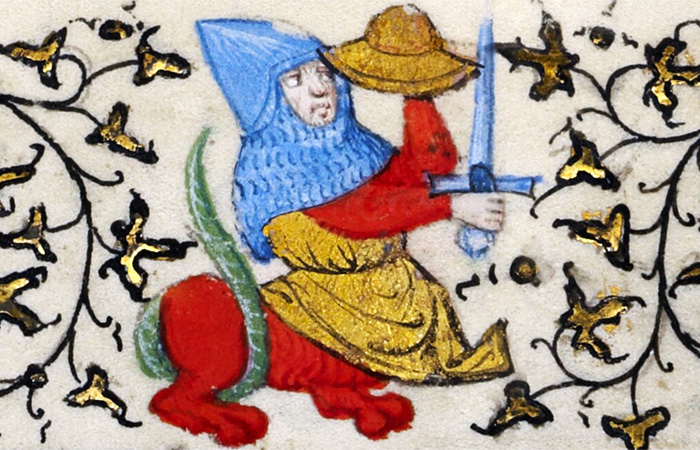
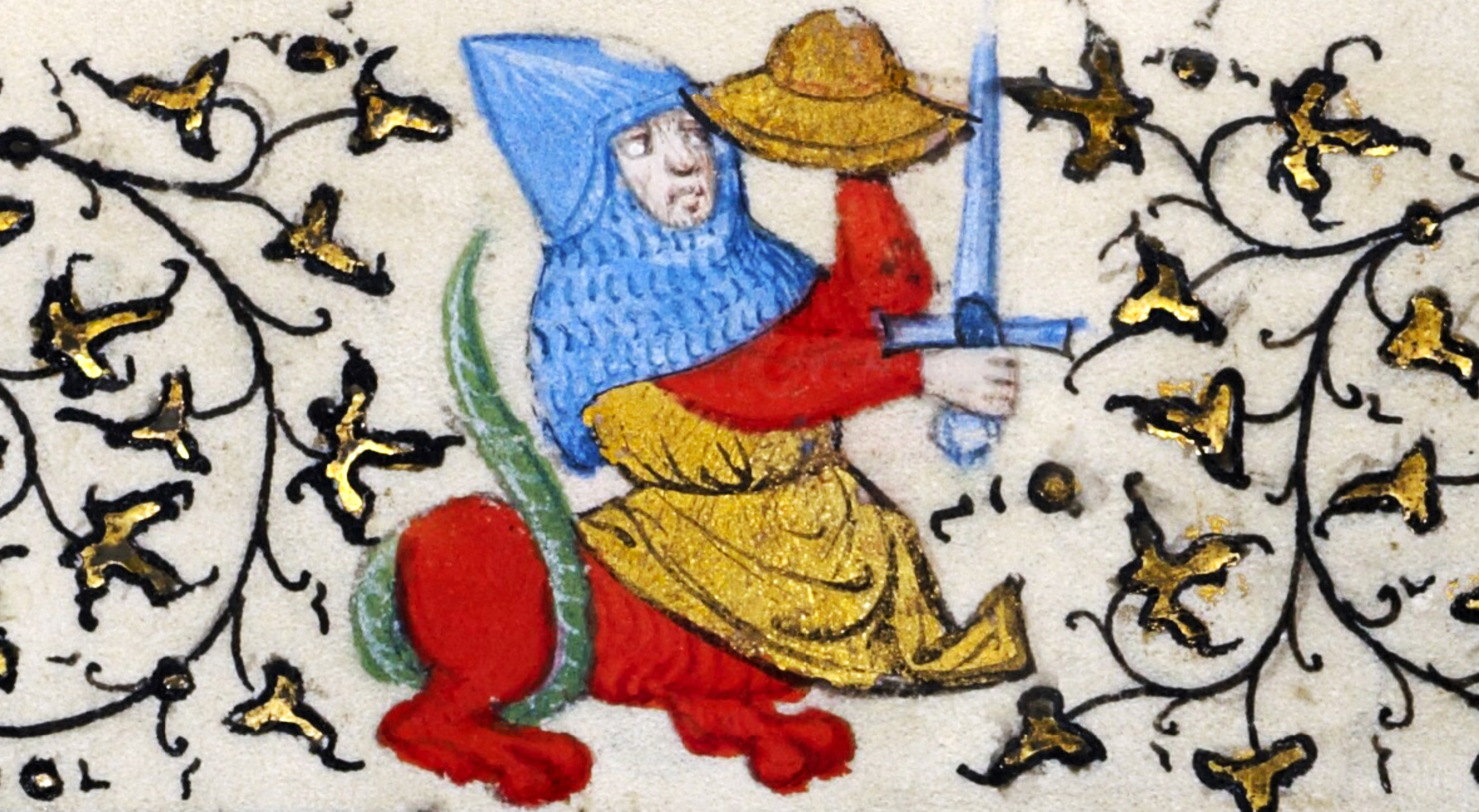
Here's a red warrior sagittary with helm, sword, shield, and snake tail. (folio 19)
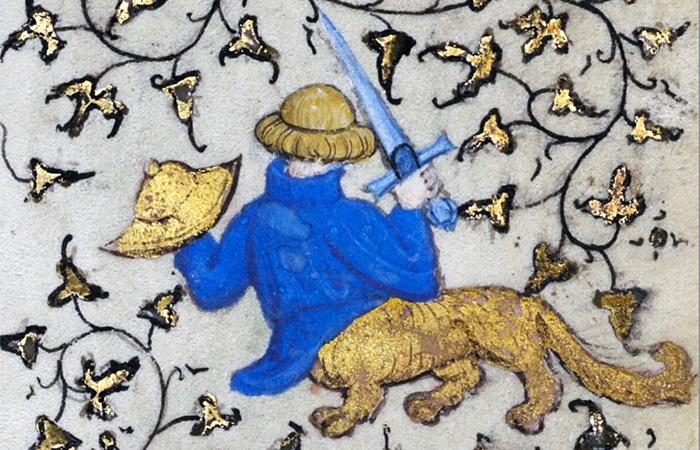
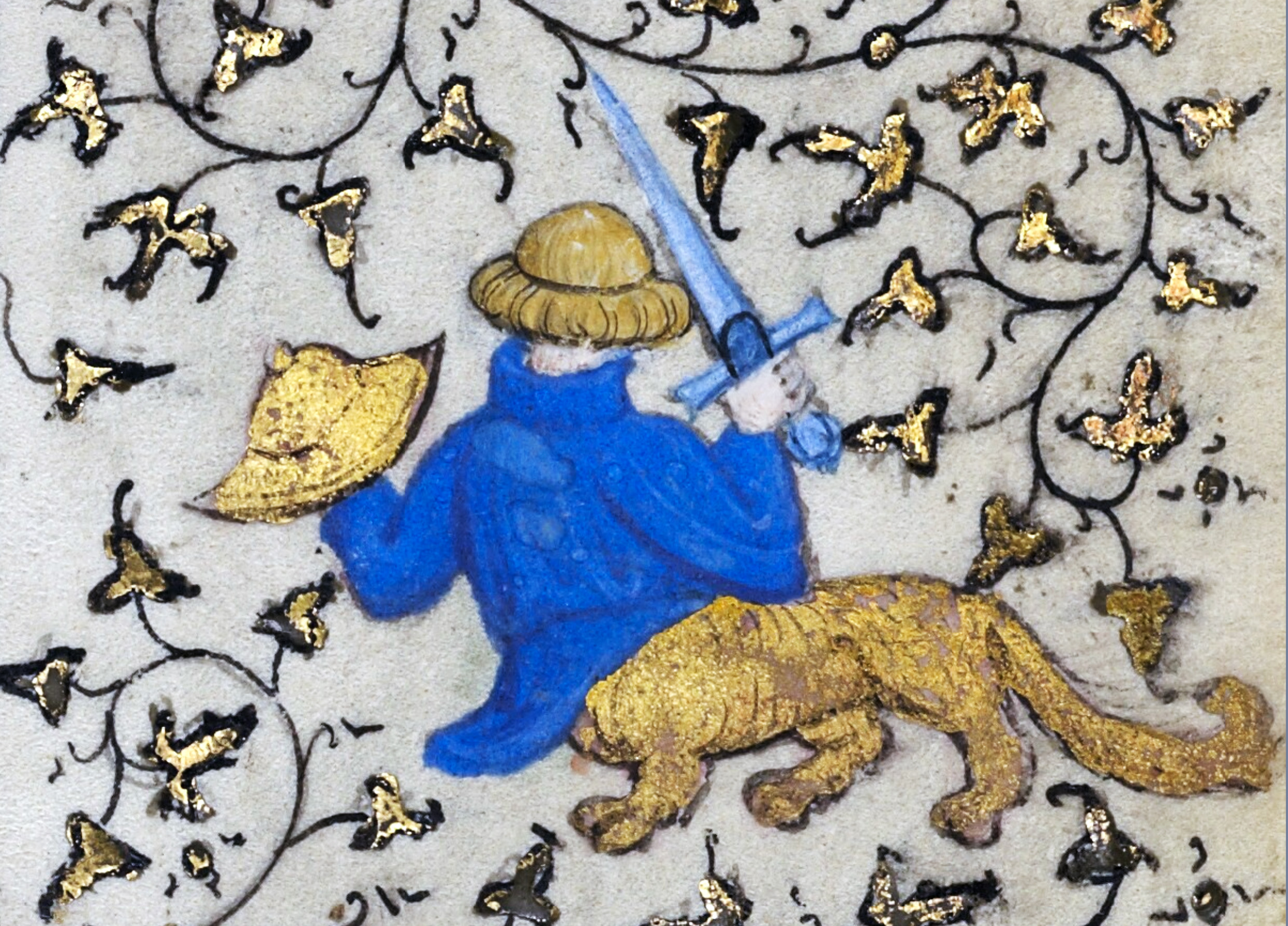
This seems to be a monk, based on the hair-do, also with sword and shield, facing away, with a fuzzy tail. (folio 19)
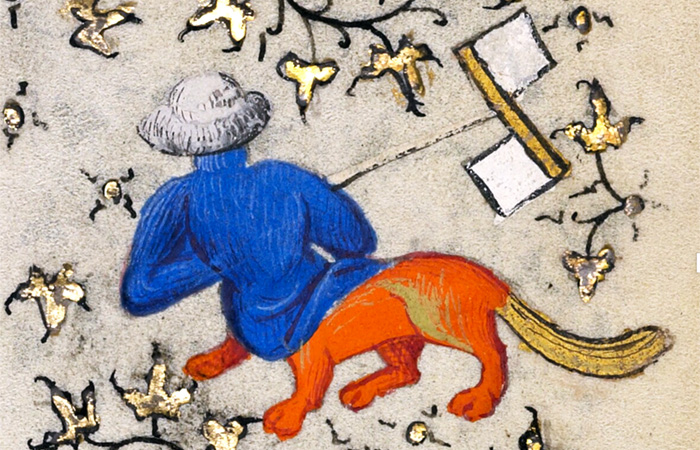
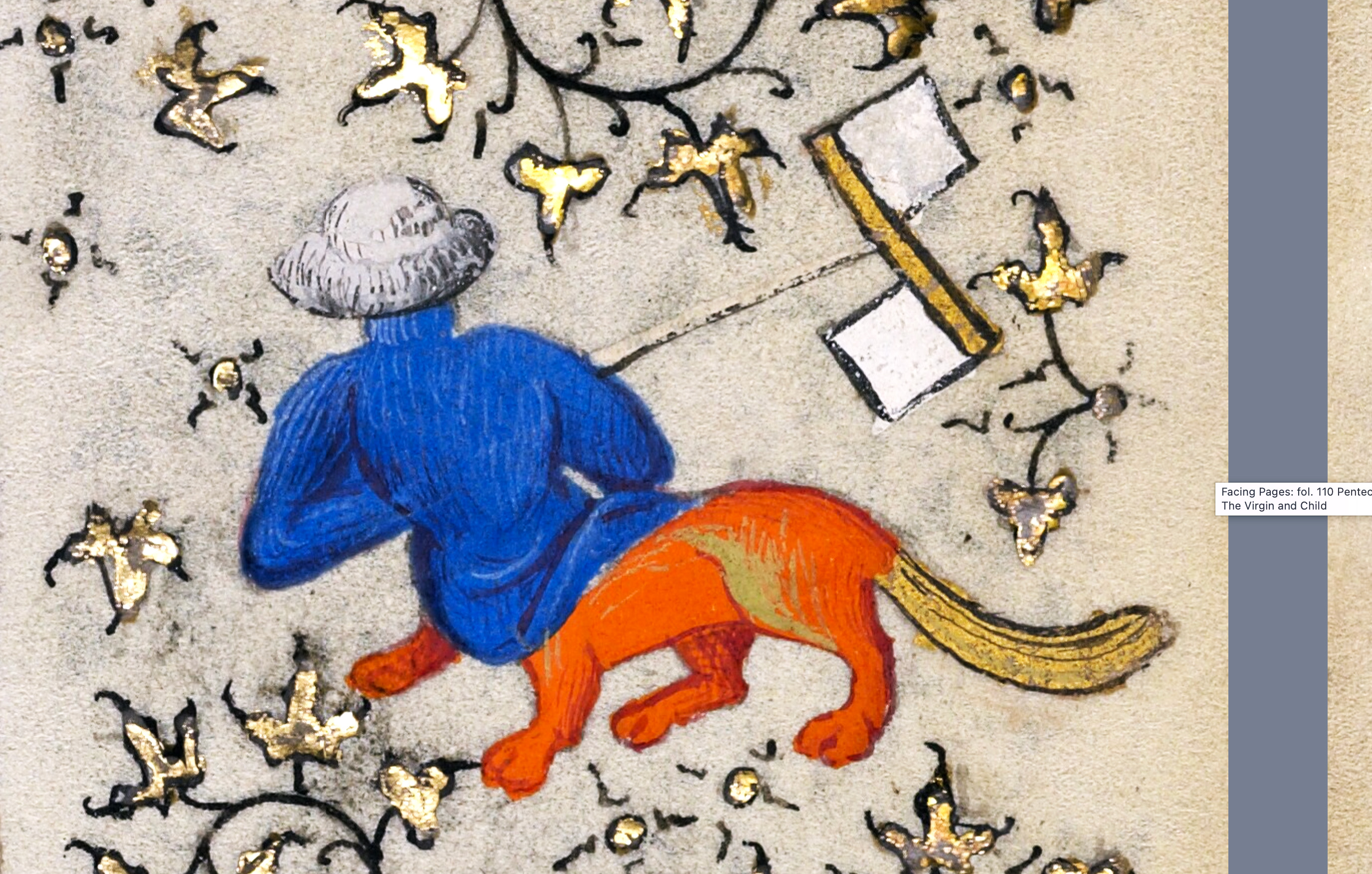
Here's the same monk after his hair turned grey, still in the same blue turtleneck sweater, still shy about showing his face, and ... flying a kite? (folio 110)
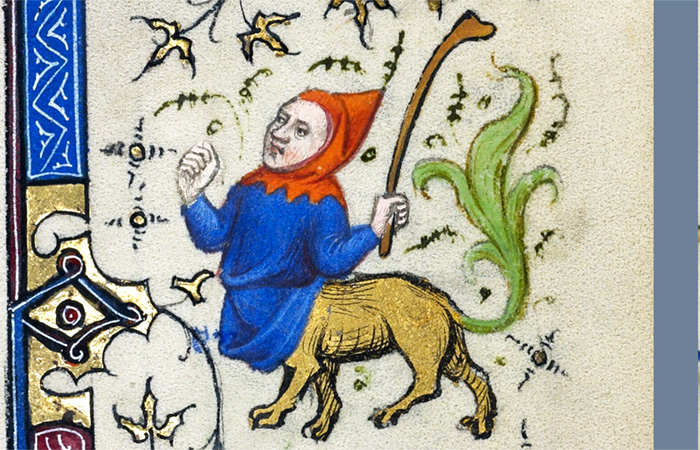
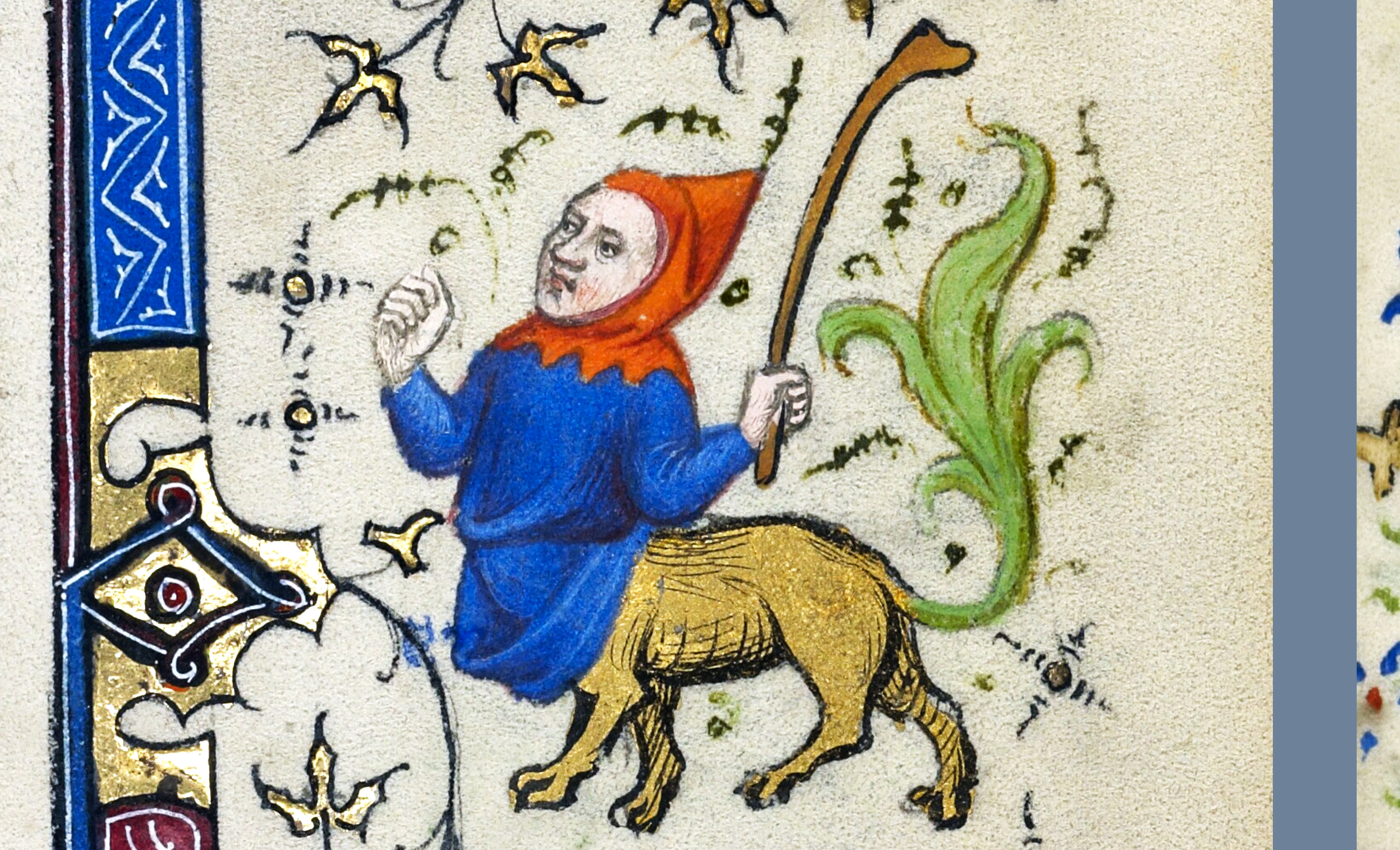
This seems to be a jester wemic? And threatening with a stick, and having a plant tail? I think I'd rather have a snake tail. Maybe he is a floral Punchinello? (folio 186)
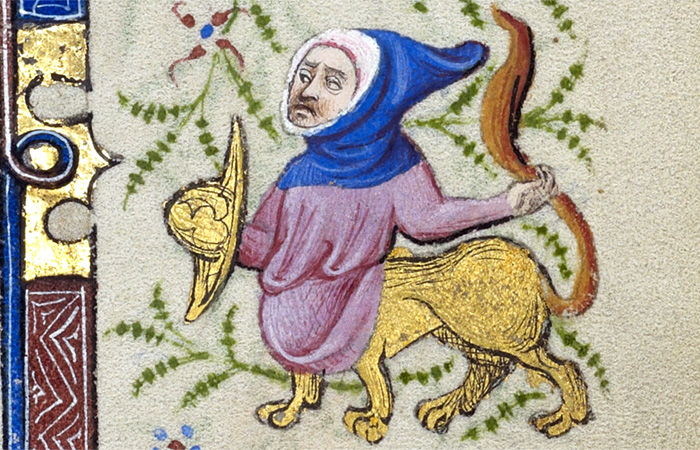
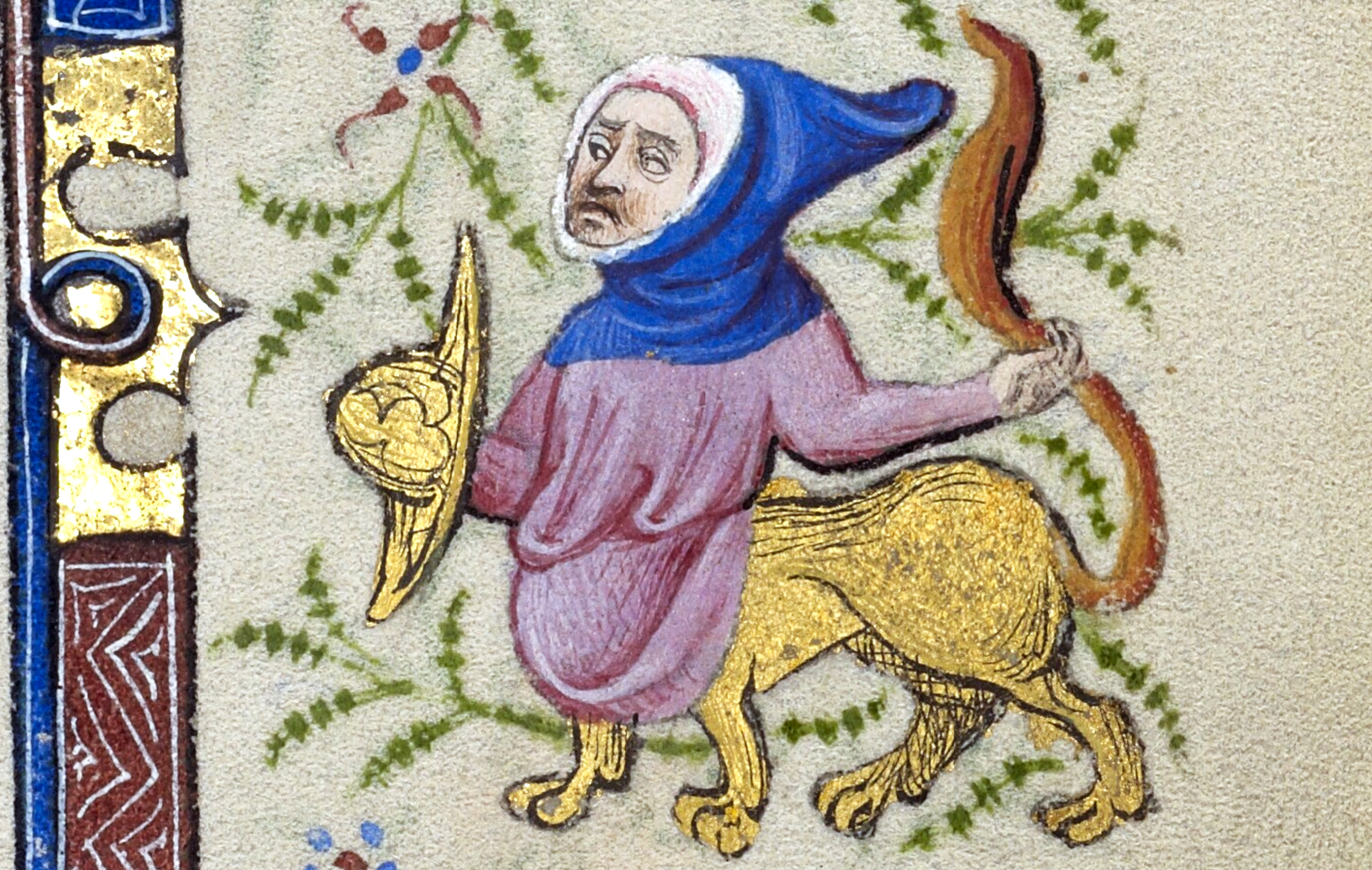
This ugly lion-centaur is wearing a religious sister's wimple and has saggy breasts, not to mention a five o'clock shadow, so I'm thinking that the artist had a grudge against nuns, or at least one in particular? And why is she holding her own tail, rather suggestively? (folio 192)
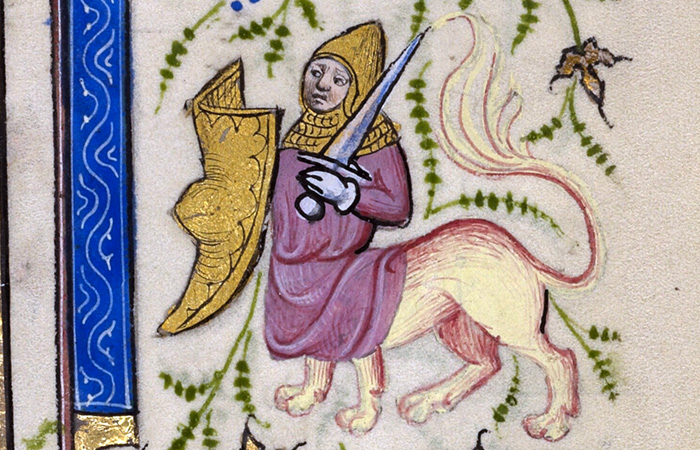
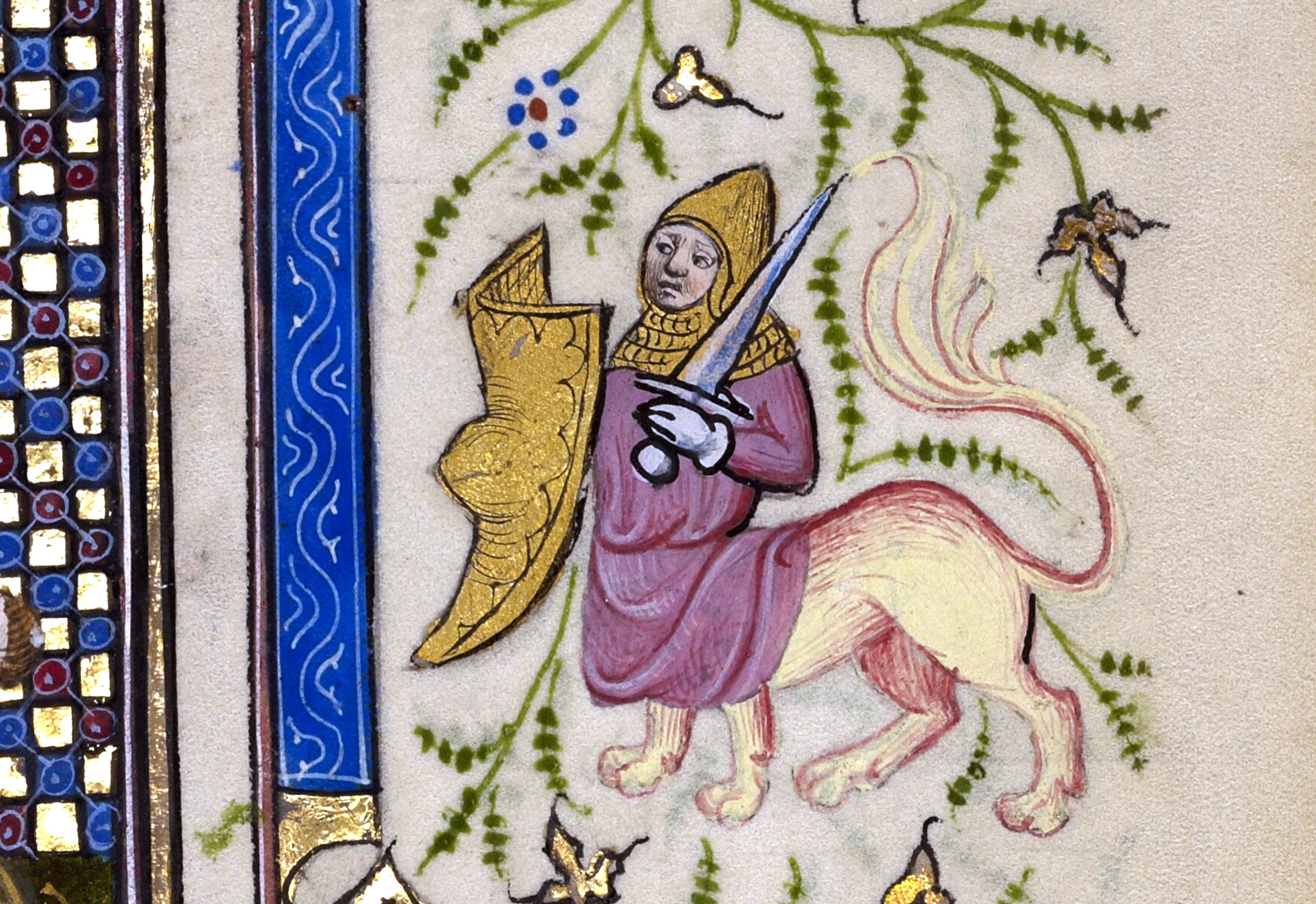
Here's a noble and serious liontaur warrior, standing ready to protect the weak and needy. (folio 193)
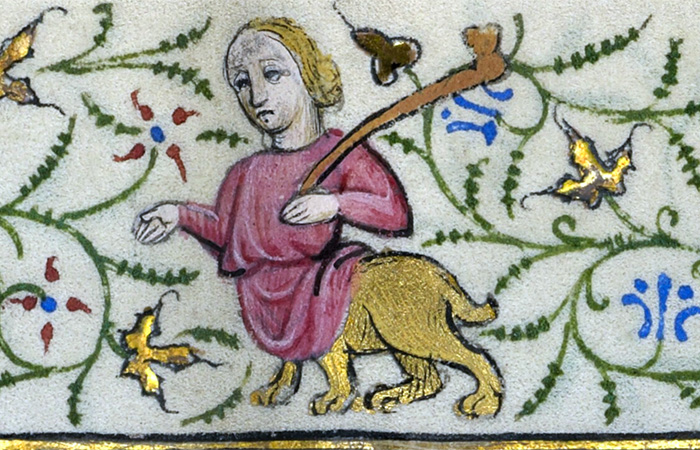
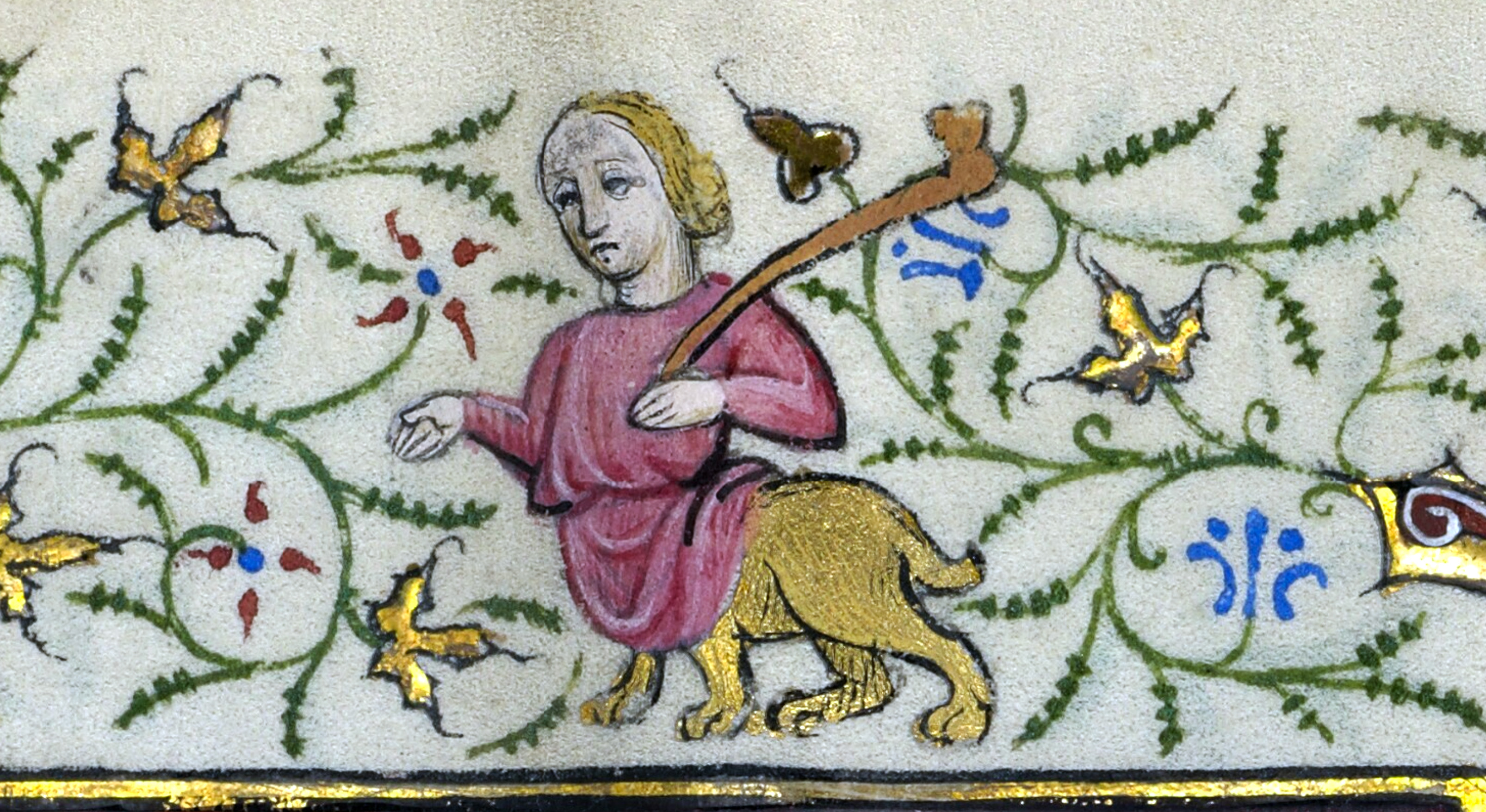
It may be my modern biases showing, but this one looks female to me. Probably because of the hairstyle. And she seems a little sad, doesn't she? Maybe because someone chopped off most of her tail, poor thing. At least she has her stick now to fend off attackers. Or maybe she's sad because this is the end of the book. (folio 197)
If you have not yet sated your appetite for illuminated sagittaries and drolleries, check out my prior screeds on the topic:
- 1 Dec 2013: A trip to the Cloisters of the NY Metropolitan Museum of Art and my discovery that drolleries exist.
- 19 Dec 2013: Cloisters librarian Michael Carter offers interesting insights.
- 29 Nov 2014: My first discovery of true, four-legged archer liontaurs. The bows make them genuine sagittaries. Very exciting, still some of my very favorites. (Plus, bare boobies.)
- 24 May 2015 (plus later updates): This is a screed about how medieval liontaurs are often depicted with bifurcated, ornate, floral tails. There's an example (scroll down) from an illuminated manuscript.
- 29 June 2016: A lovely example of a leonine sagittary drawn into an illuminated book of prayers called the Stammheim Missal
- 30 Aug 2016: Illuminated lions, drolleries, and sagittaries.
- 25 Sep 2016: 25 illuminated sagittaries from manuscripts in New York City's Morgan Library.
- 23 Dec 2016: Six more liontaurs in a Book of Hours from the diocese of Cambrai, found in the digital collections of The Walters Art Museum in Baltimore.
- 26 May 2017: Lion-centaurs at the Bibliotheque Nationale de France.
- 31 Oct 2024: A book about illuminated marginalia.
Postscript: There is so much more to explore, in many collections and even just in the Getty. Here's another manuscript to delve for the future.