Minchiate was a card game played in Europe, especially in Italy, from the mid-15th century to the mid-19th century. There are a lot of similarities between a minchiate deck and a tarot deck. I strongly recommend the Wikipedia page on minchiate. It featured a 97 or 98 card deck, and it used the suits of cups, batons, coins, and swords (compared with modern decks that use hearts, clubs, diamonds, and spades). Sometimes "batons" are called wands or clubs; in later tarot decks, coins became pentacles. In addition to Kings, Queens, and Jacks (called Pages), a minchiate deck included Knights. And these Knights, rather than mounted humans, were represented as tauric hybrids: One or two centaurs, one or two liontaurs, and a weird monster, human above the waist, foreclaws and fish tail with wings below. But let's look at the lion-centaurs (click to embiggen).
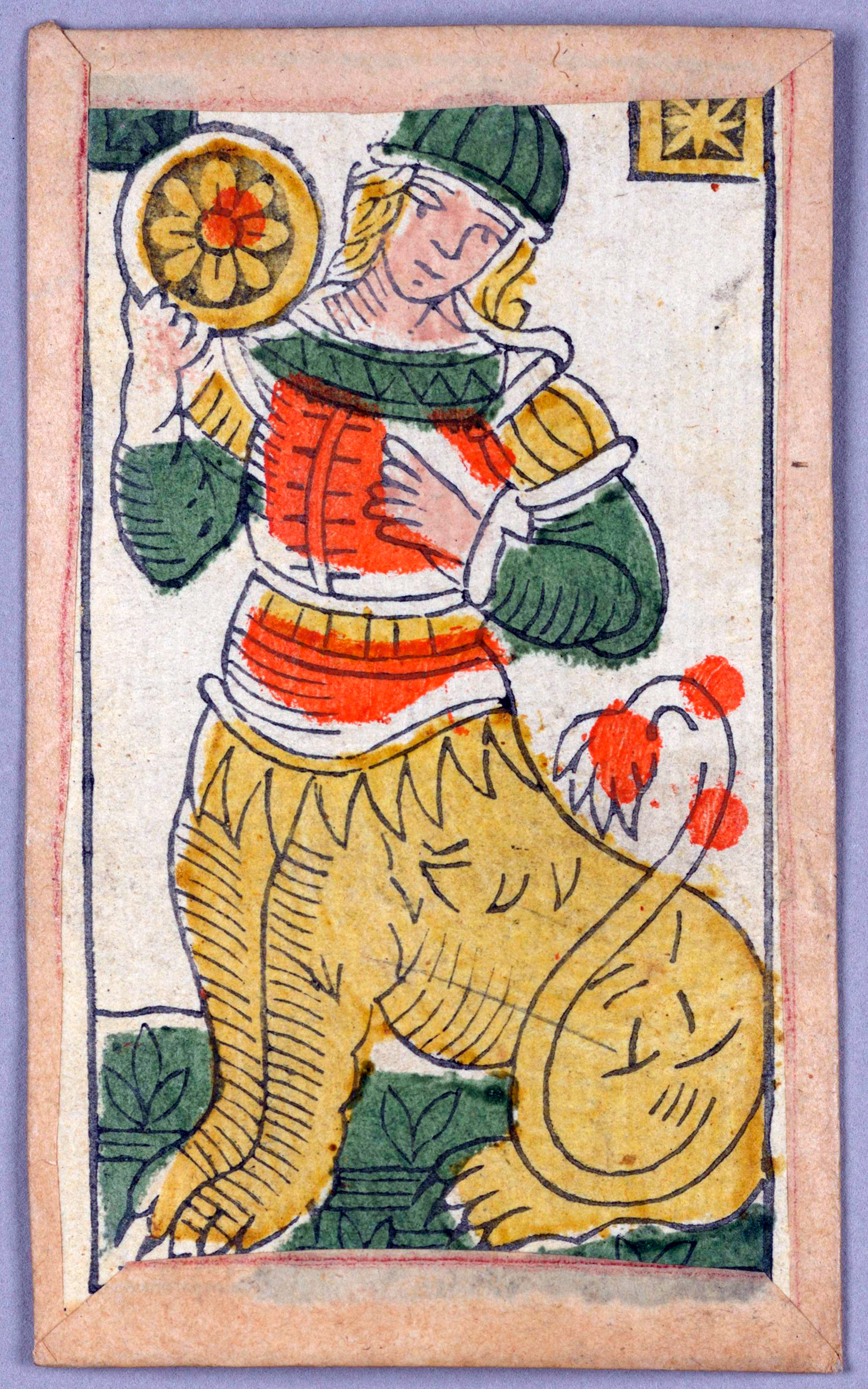
The Smithsonian has a minchiate deck in its collection, dating to the 17th century. The card above shows the Knight of Coins from that deck. It was made in Florence, Italy, where the game was invented. It is interesting to me that this liontaur has a fringe of mane around her waist; that signifies a direct line of descent from medieval sagittaries drawn in books of hours and other illuminated texts, such as in these two examples. It is also nifty that this liontaur is a female, if those long blonde tresses are any indication.
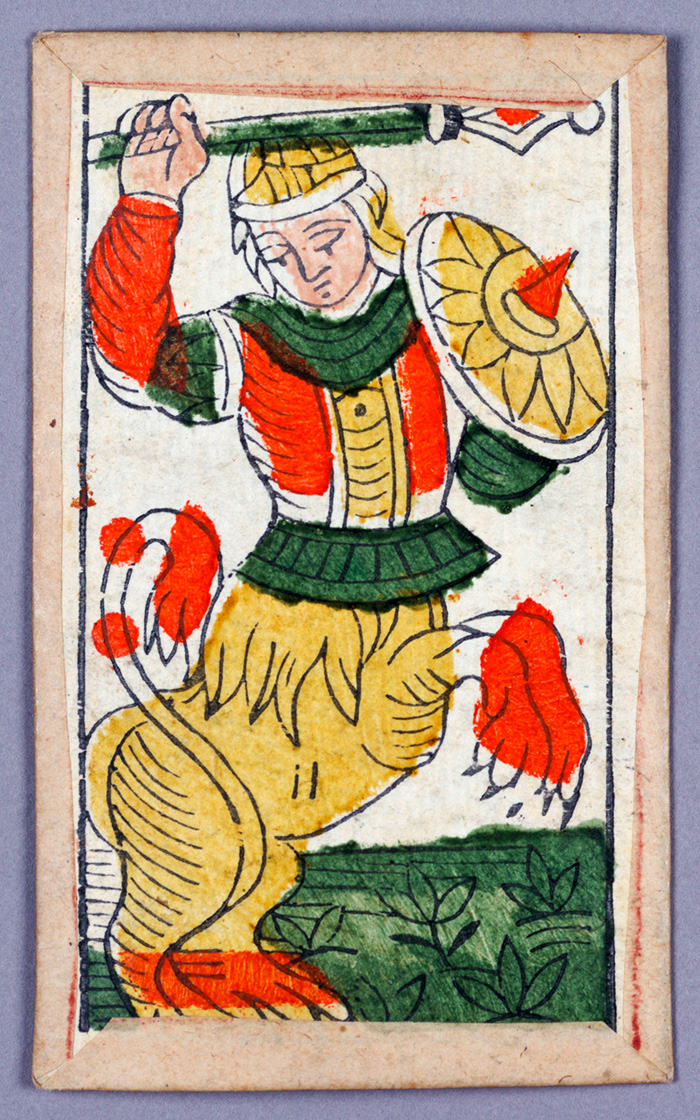
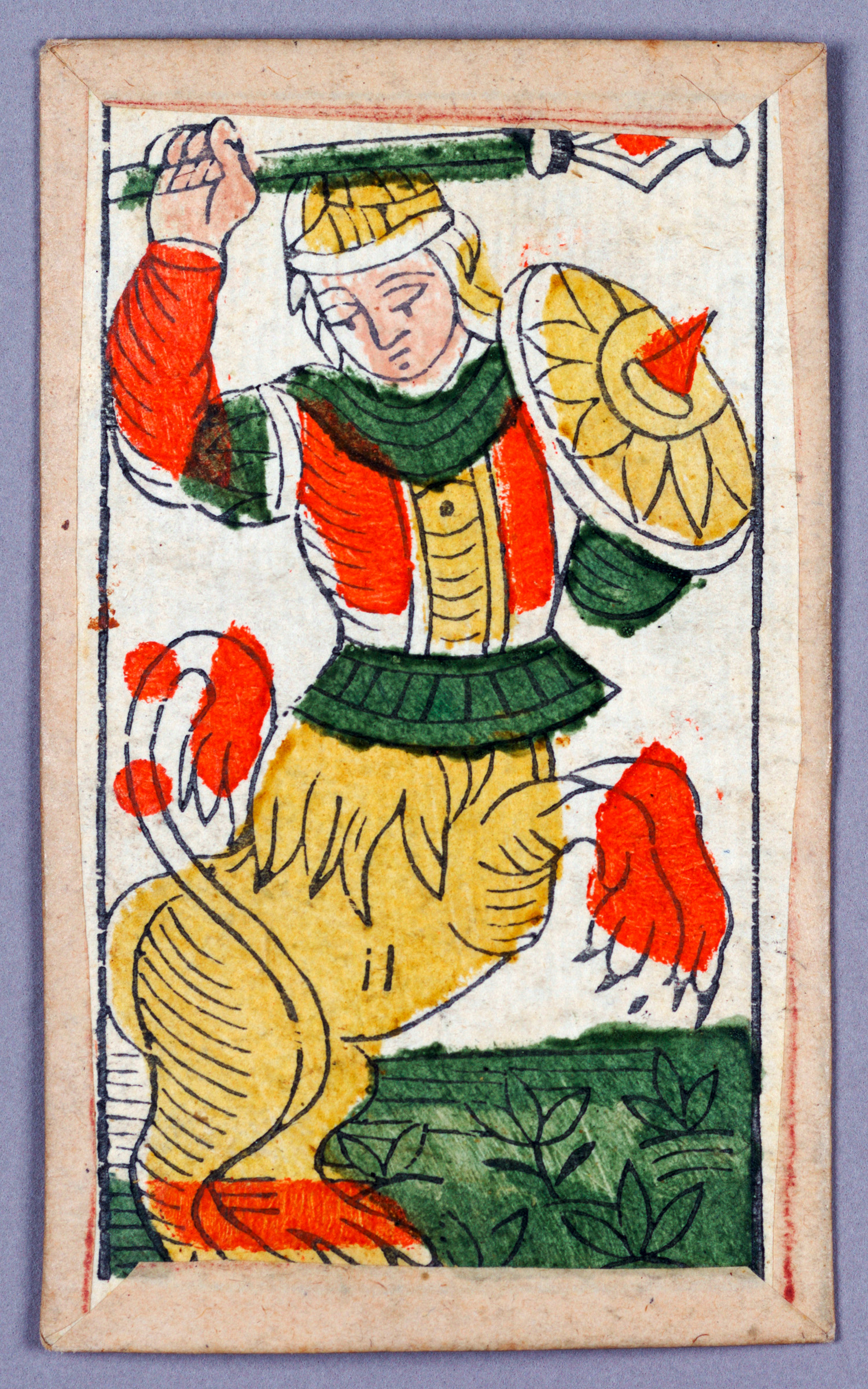
From the same deck, the card above shows the Knight of Batons.
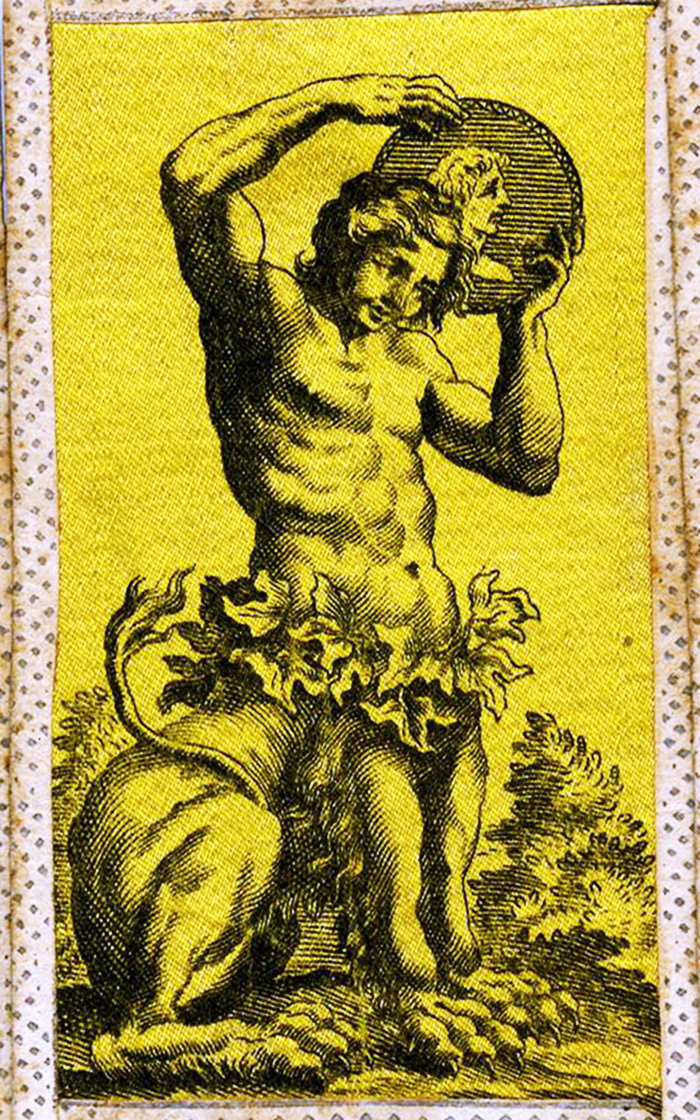
Here's another Knight of Coins, above, that I found at the British Museum. It's from a more modern deck, dating to the 18th century. Here, we've lost the fringe of mane and gained a girdle of grape leaves. Still very much a liontaur, though, and I love his smile. This deck, printed on yellow silk, features the coat of arms of the Medici family.
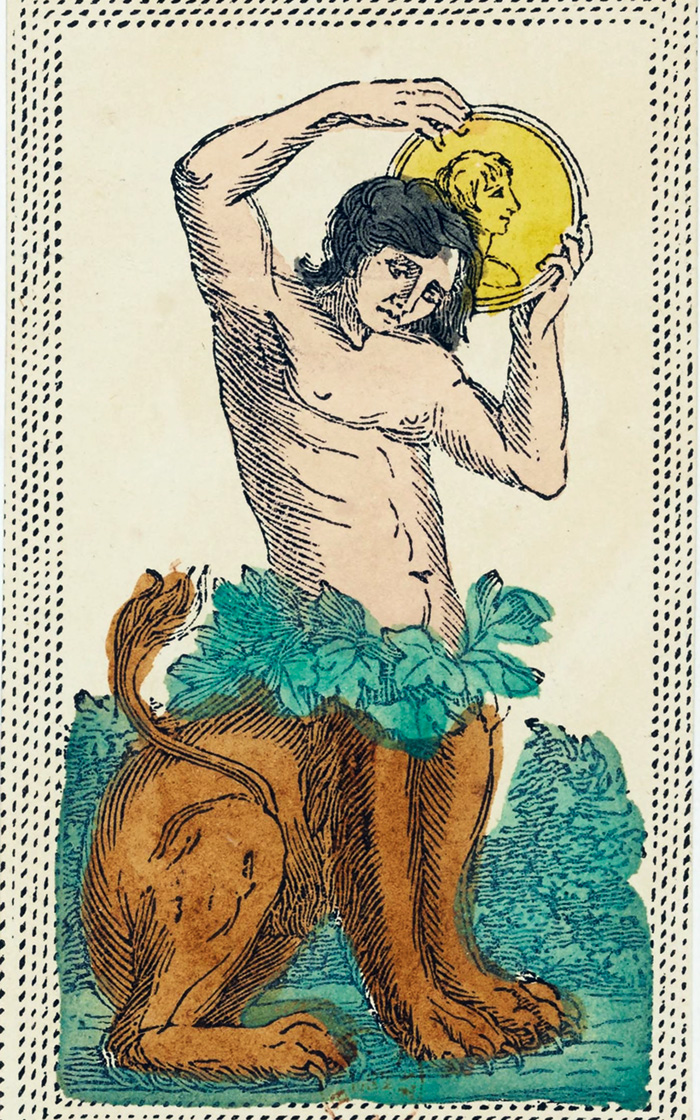
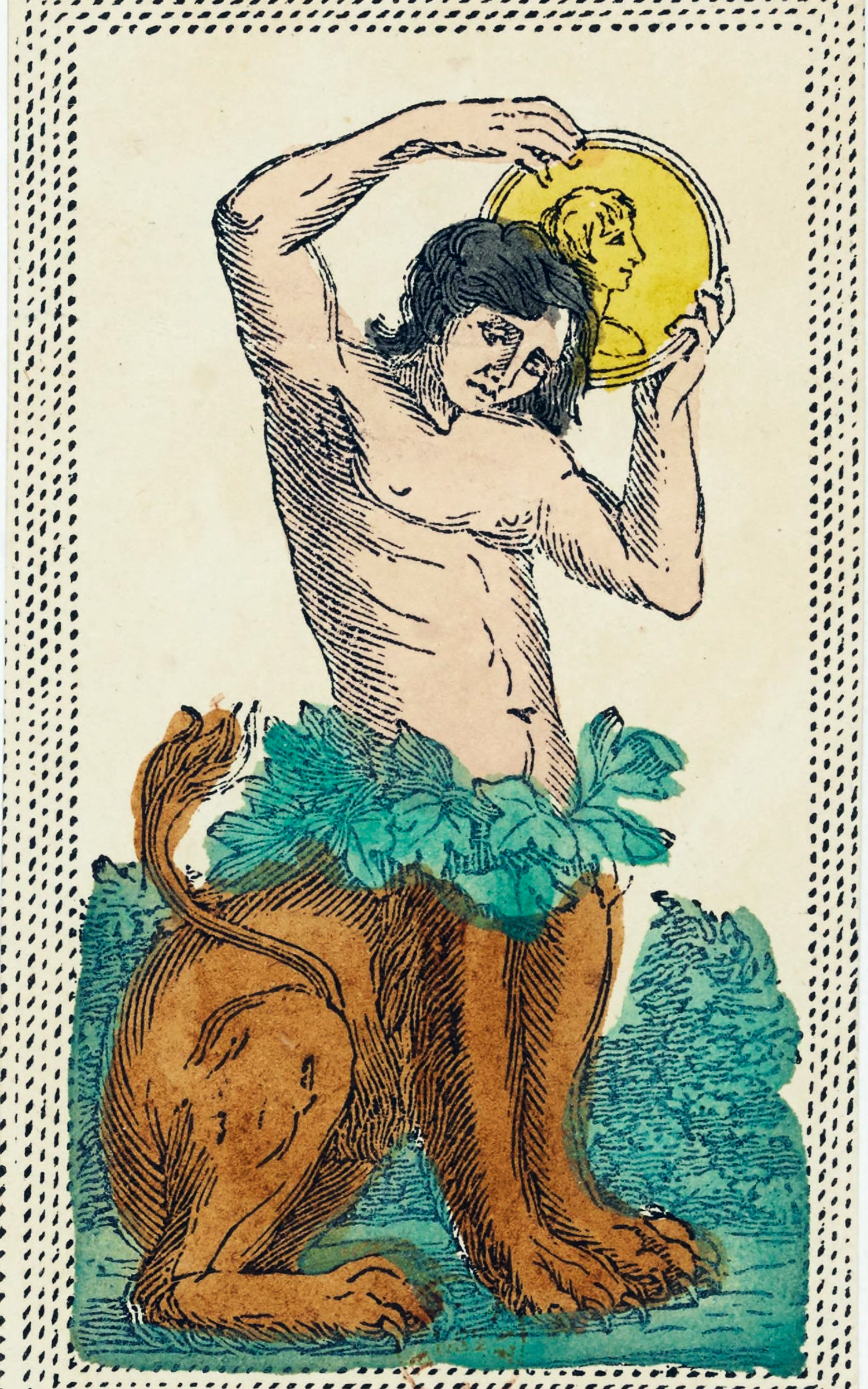
This Knight of Coins is the most modern deck I've found, 19th century, made around 1860-1890 in Florence. I found this one in the collection of the Bibliotheque nationale de France. The pose is exactly like the one immediately above, but in color, and with a more dour countenance. (In this deck, the Knight of Batons is a centaur.)
Note that I am indebted to Wynnefox on Blue Sky, who brought these cards to my attention. Thanks!