I have blogged about the tiger-taur goddess of ancient Harappan culture. That was for a pre-literate Indus Valley culture dating back three to five THOUSAND years ago. But a mere two thousand years ago, myths of the region still featured a lion-centaur creature. With the advent of writing, we have records of this one (and stone carvings), and we can put names to them.
Dating to around the start of the common era, Hindu mythology included leonine hybrid creatures. Lots of them, actually! These lion-creatures are called Yali, Shardula, Vyāla, etc. Here's a Wikipedia article on Yali, and here's a Wikimedia Commons gallery of Yali images (no wemics, alas). There are plenty of Yali examples that are only a few centuries old, but the two examples of human-lion yali I have found both date way back to the first century.
One academic paper, "Chimeric Imageries in Indian Art: Transition From Architecture to South Indian Kalamkari Hangings," by Pragya Pathak, lists 20 varieties, from griffins to bull-lion, serpent-lion, and parrot-lion hybrids, among many more. Of particular note to me, of course are lion-human hybrids, called Nara-vyāla.
To save my typing fingers irreparable harm, I'll be culturally insensitive and just drop the accent marks: vyala and nara-vyala, here on out.
So far I have found two examples of these creatures. Let's dive deeper.
(All images in this screed can be clicked on to embiggen.)
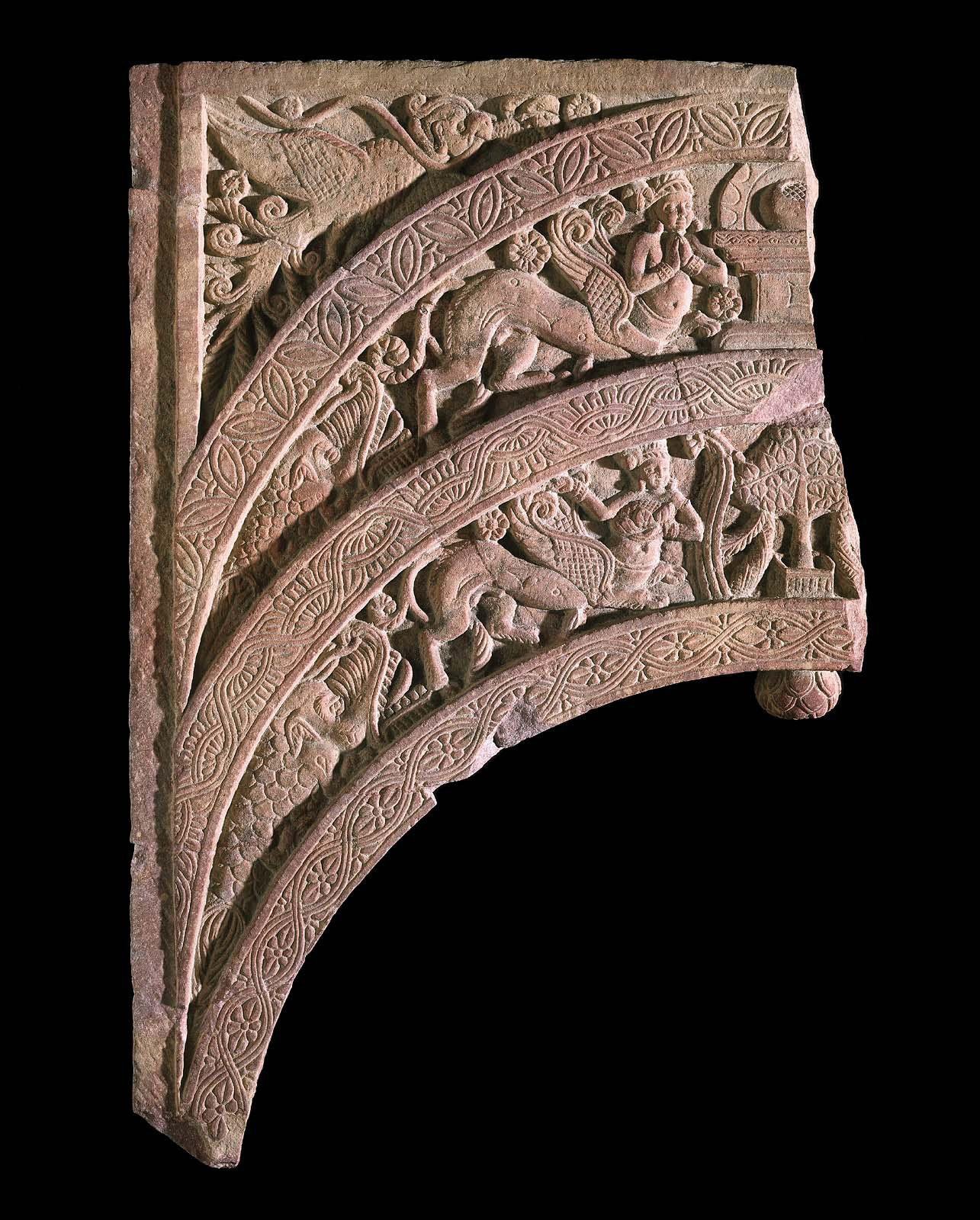
Tympanum from a Buddhist structure
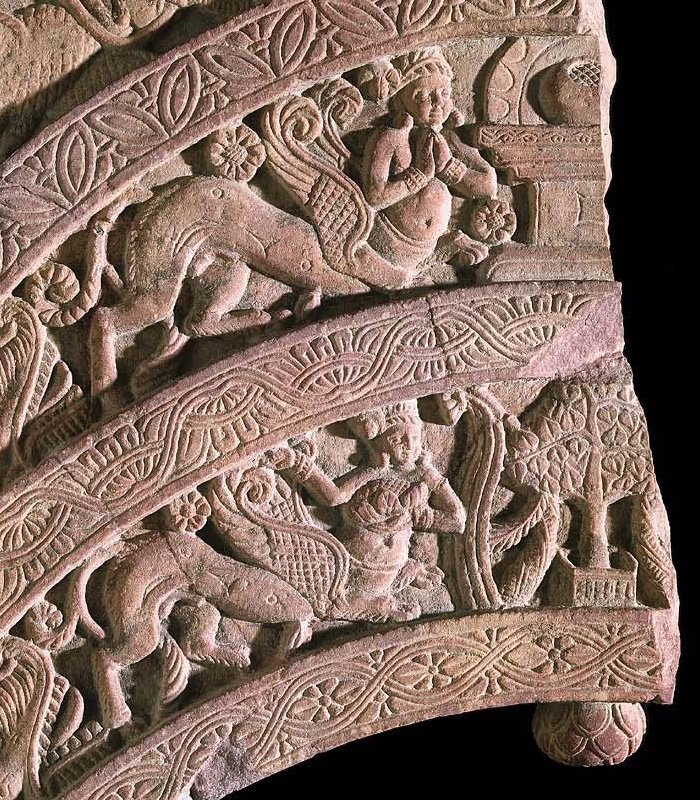
The caption on the MFAB museum web site for this reads, "Indian, Shaka period, about first half of 1st century C.E., Place: Mathura region, Uttar Pradesh, Northern India; Medium/Technique: Sandstone; Credit: Charles Amos Cummings Bequest Fund; Accession Number 26.241."
I found this at the web site of the Museum of Fine Arts Boston, commonly called the MFAB. This particular art, a piece of an archway, can be found on the MFAB site. The museum site is a little short on detail, but I found another academic publication that offers more. In "Naravyala – Purusanrga – Sphinx: Preliminary Observations on an Iconographic Cluster in South & Southeast Asia," by Corinna Wessels-Mevissen, the author says:
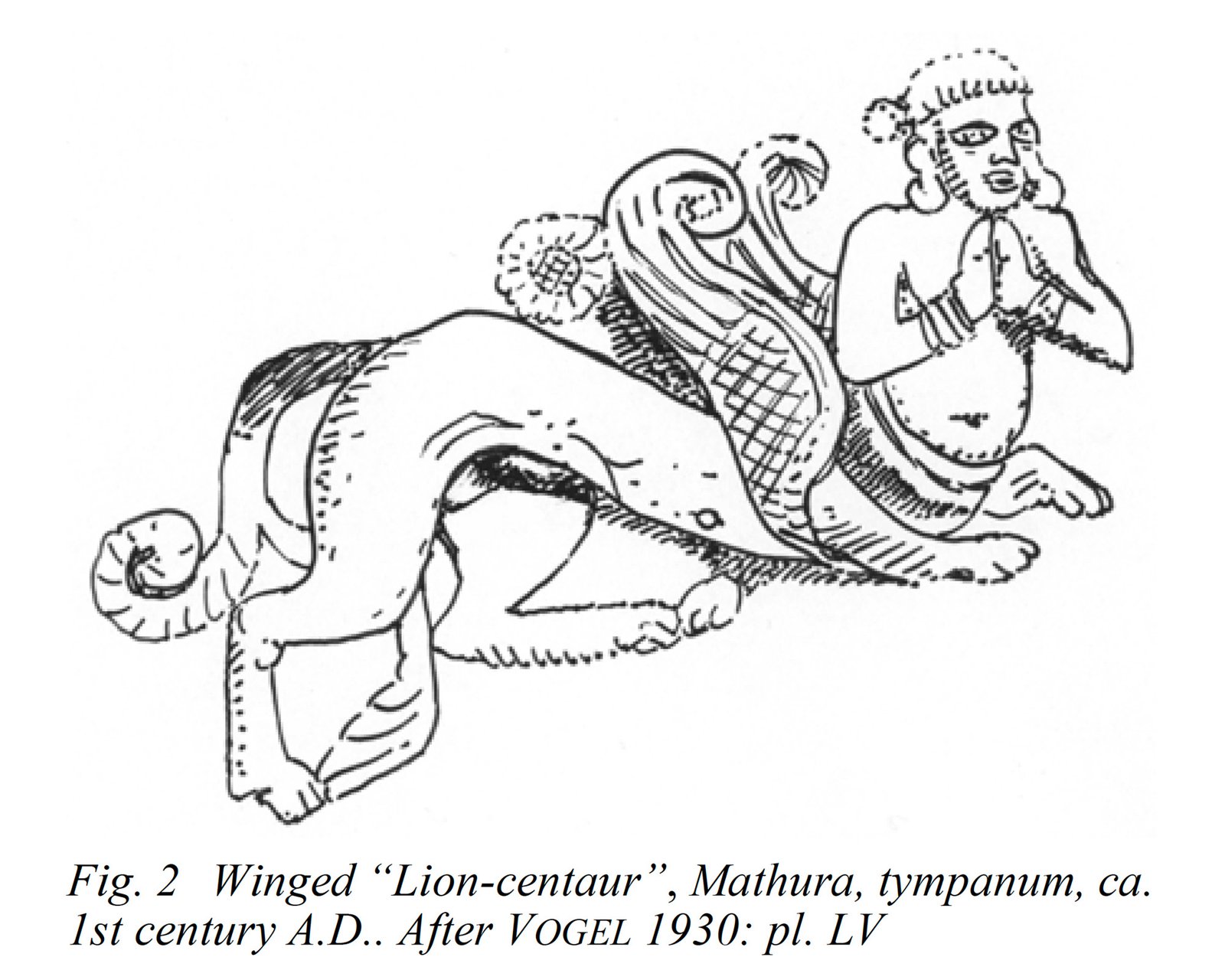
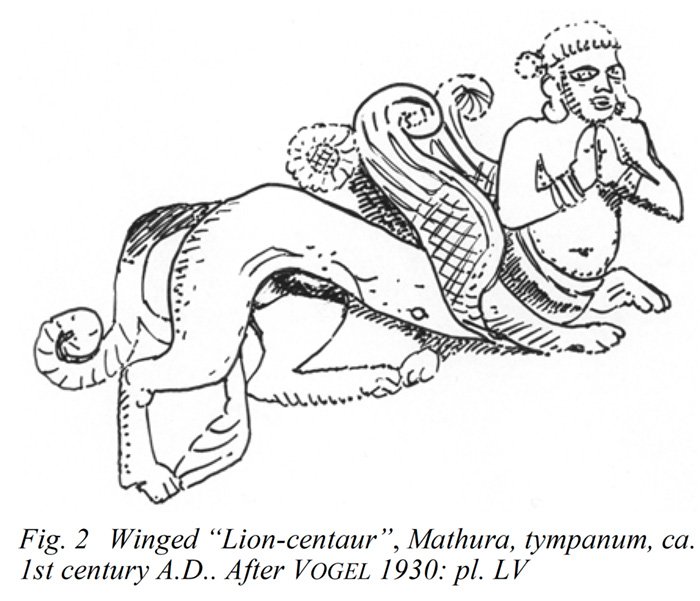
Evidence of a great number of assorted early hybrid figures has been collected by several authors, particularly K. KRISHNA MURTHY (1986), S.L. NAGAR (1989) and K. Bh. IYER (1977). They belong to a lively cosmos of fantastic beings including griffins (or 'leogryphs'), centaurs, tritons and other hybrids, with some of them composed of more than two different animal species. Operating with DEMISCH's broadly conceived sphinx category, various forms of these can be identified. Besides the usual lion-sphinx with or without wings, a related type referred to as a "lion-centaur" by DEMISCH (Fig. 2) can be found.
After reading this, I've been trying to get my hands on a copy of Die Sphinx by Heinz Demisch. Between the remnants of my high school German and Google Translate, I'm not too worried about the language barrier. I'm hoping to get it through my university library. Maybe for a future screed.
Wessels-Mevissen also includes a line drawing of the work. Take a look:
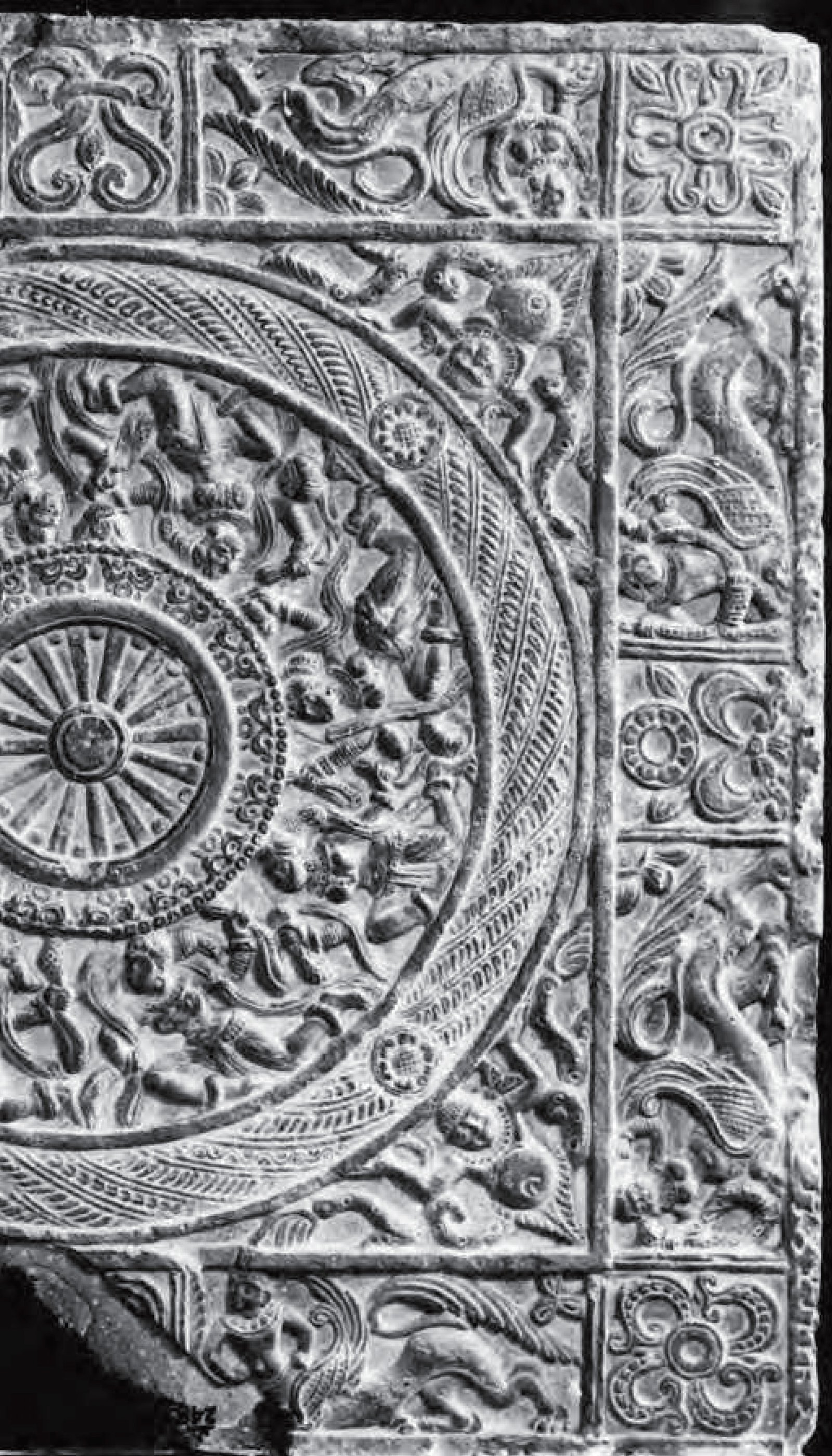
Mātharaka Āyāgapaṭa from Mathura
Found in Kankali Tila, Mathura, India, this ayagapata, or prayer stone, shows four nara-vyala around the edges of the slab.
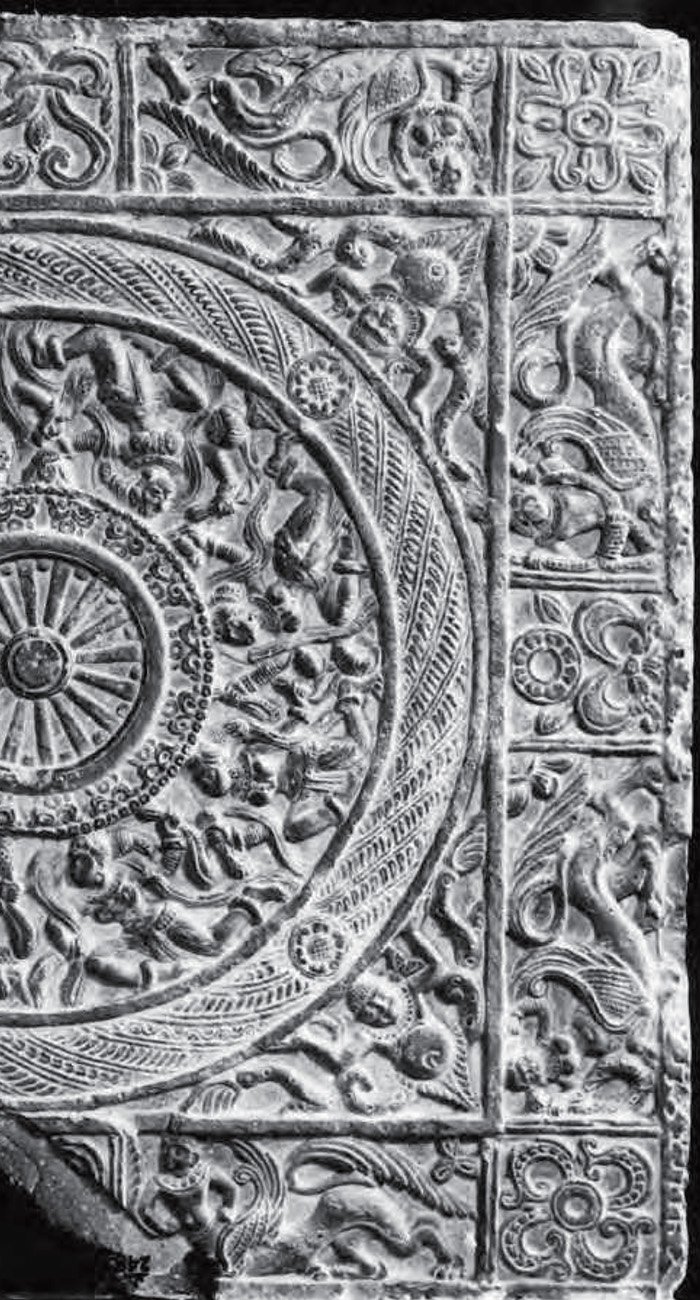
The caption on this one reads, "Fig. 143. Mātharaka āyāgapaṭa, from Kaṅkālī-Ṭīlā, Mathura, Uttar Pradesh; ca. 20 BCE. Red sandstone; H. 34" × W. 34" (87 × 87 cm). State Museum, Lucknow; J.248. Photo: J. M. Rosenfield."
I learned about this artwork in an academic publication, "History of Early Stone Sculpture at Mathura, Ca. 150 BCE-100 CE," by Sonya Rhie Quintanilla (also available at academia.edu). Quintanilla talks about the piece:
The Matharaka ayagapata represents a different version of the diagrammatic type of ayagapata, but with similar symbolic attributes. The central element is a sixteen-spoked wheel, surrounded by a ring of sixteen nandyavarta-and-lotus symbols .... A composite creature with the body of a winged lion and the torso of a man or a woman is carved in each of the rectangular border panels, and they are shown in the act of bringing offerings.
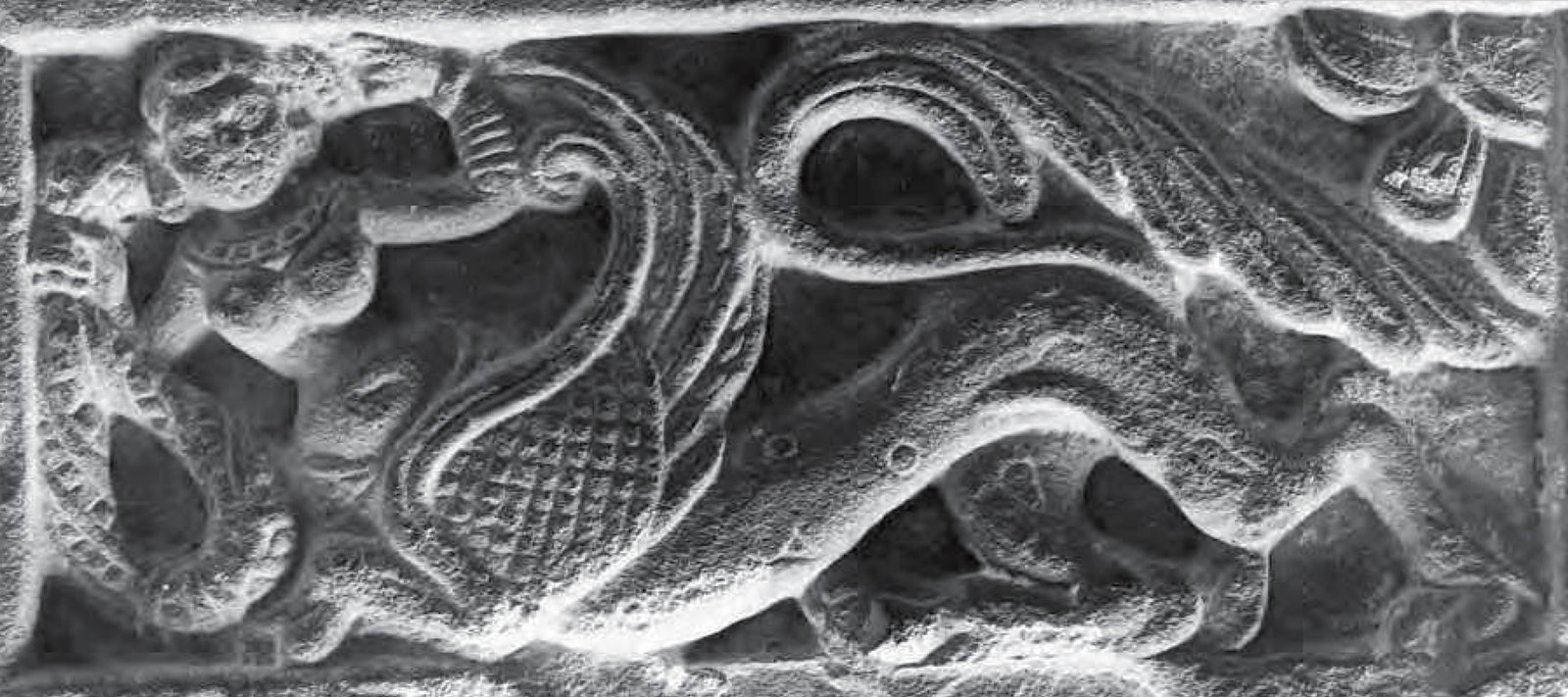
Quintanilla focuses in depth on the lowermost nara-vyala. Take a look:
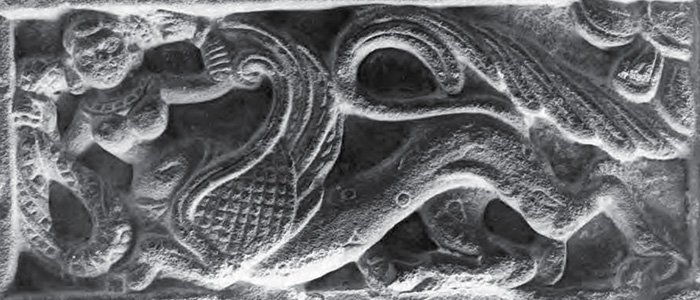
She goes into detail on this one:
The half-female, half-leogryph creature in Fig. 145 surges forth, clutching a garland in her right hand. Her curling wing is not rendered with simple parallel incised lines, but with feathery strokes of irregular depth and a cross-hatched section that provides a contrasting texture. Her tail curves forward and doubles gracefully back with a taut inner energy.
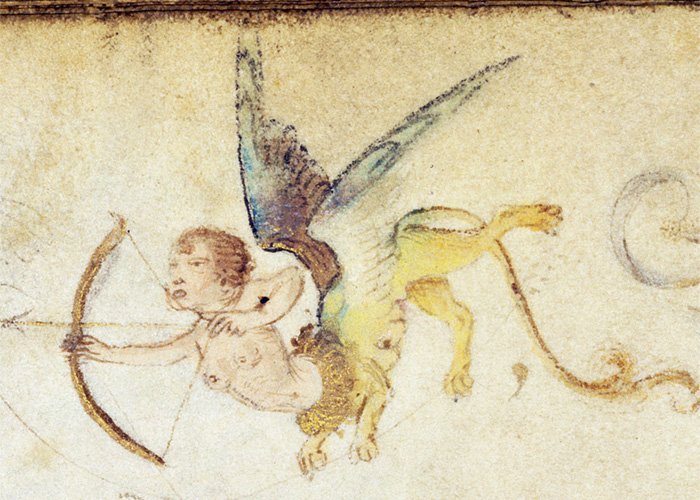
I know that they are separated by 4,000 miles and one and a half millenia, but I can't help thinking that these nara-nyala are kissing cousins to this wonderful sagittary from a Book of Prayers drawn around 1450 in the Low Countries.