Back in the middle of the 19th Century, English archaeologists were super busy wandering around the ancient world, finding archeological treasures, digging them up, stealing them, and shipping them back to the British Museum. To this day, the Brits refuse to return the Elgin Marbles, for example.
Similarly, the Brits dug up and shipped to England a lot of Ancient Mesopotamian art, especially sculptures from the Palace of Ashurbanipal at Nineveh. Please check out this remarkable Google Arts & Culture interactive article, Assyria: Palace Art of Ancient Iraq, featuring art from the British Museum and the Getty Museum. Scroll way to the bottom to see the urmahlullu.
I'll have a lot more to say about Nineveh's urmahlullus in a future screed.
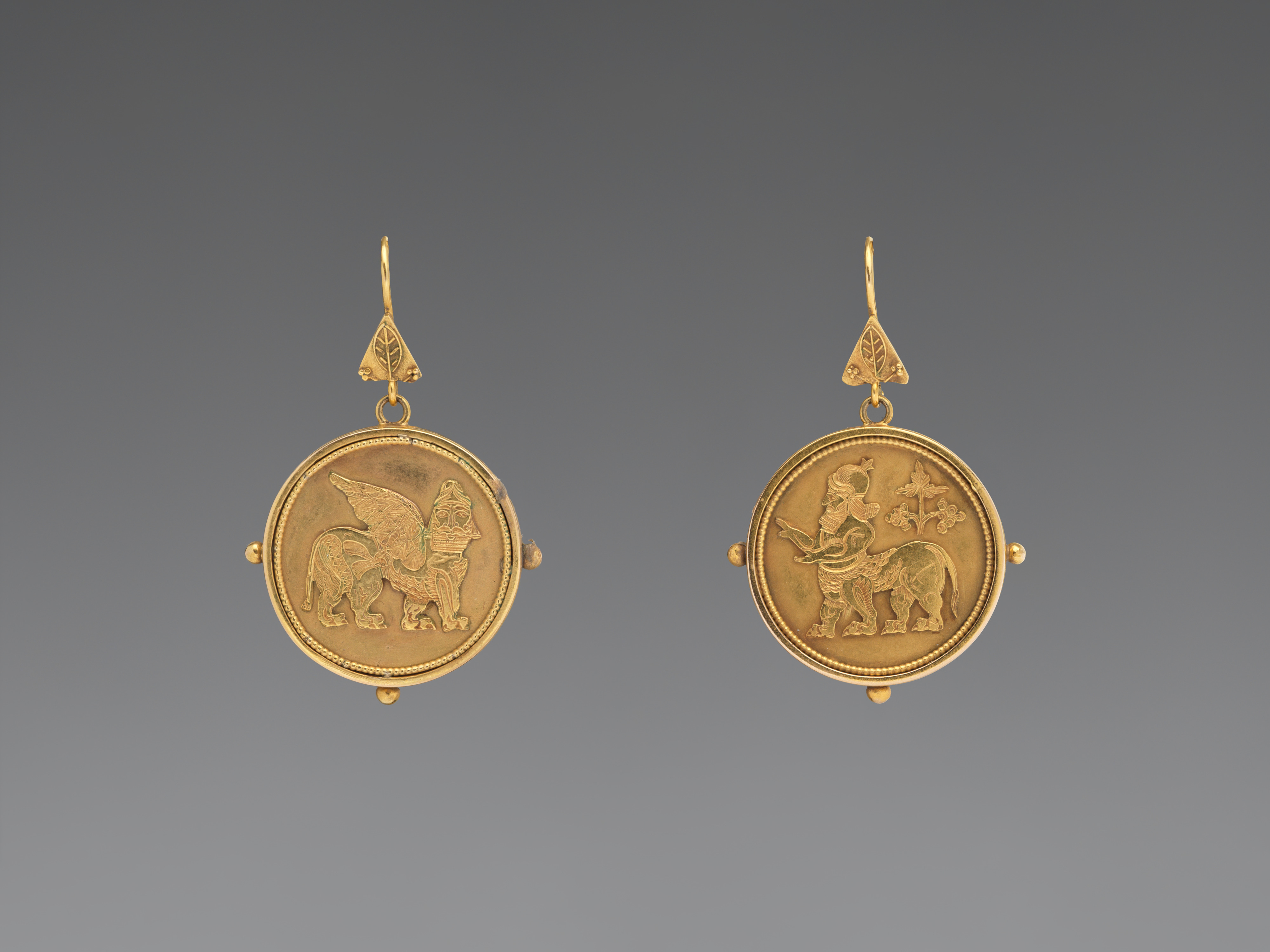
But more to the point of today's screed, the general population in the mid-1800s was quite taken with this ancient art from Mesopotamia, and they incorporated Assyrian themes and images into their Victoriana. That's how we get to these lovely earrings (click to embiggen):
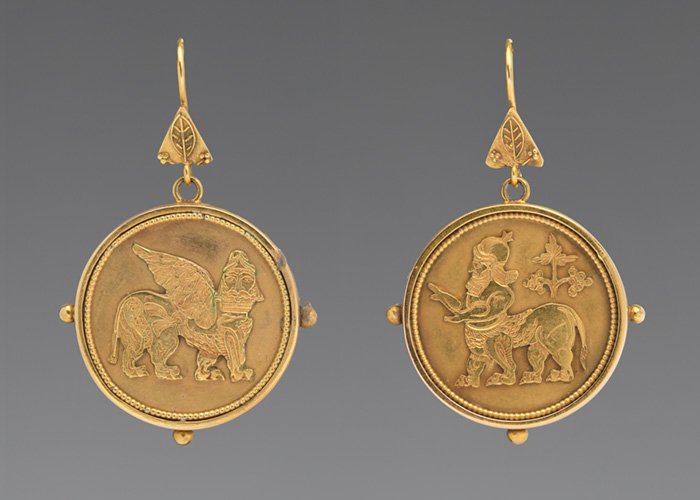
These beautiful pieces are online at the Metropolitan Museum of Art in New York City. On the website, the item notes read:
Earrings with Assyrian motifs, British, ca. 1850–1880 (Not on view)
Following the excavation of Assyrian palaces in the mid-nineteenth century, ancient Mesopotamian imagery began to be used in European decorative arts, including jewelry and ceramics. Publicity in the form of news coverage and popular books around the excavations, removal of many sculptures from sites in northern Iraq to England and France, and public spectacles such as the reconstructed 'Nineveh Court' in the Crystal Palace at Sydenham, London, fostered a fascination with Assyria and Assyrian art among the Victorian public.
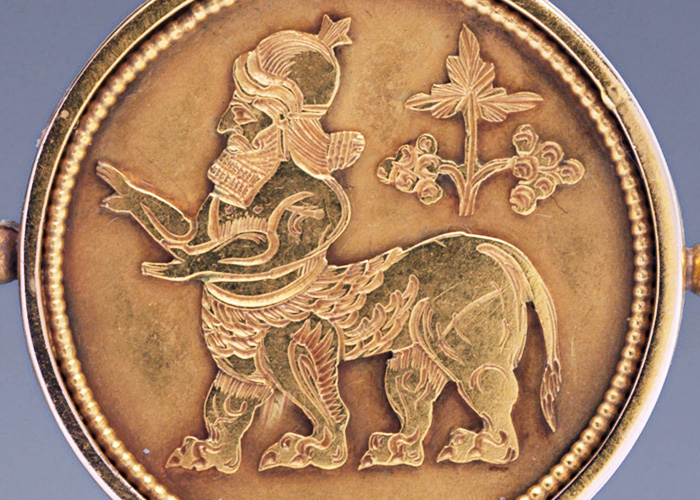
One of these earrings features a human-headed winged lion based on the famous lamassu gateway guardian figures found in the Assyrian palaces, while the other shows a less common protective figure with the legs and body of a lion and a human upper body and head, identified in texts as urmahlullu, as well as a plant motif.
I like thinking that 150-plus years ago, people were looking at urmahlullu in wonder and delight.
I did a little color correction in Photoshop to make this fine fellow pop. Here's a close-up: